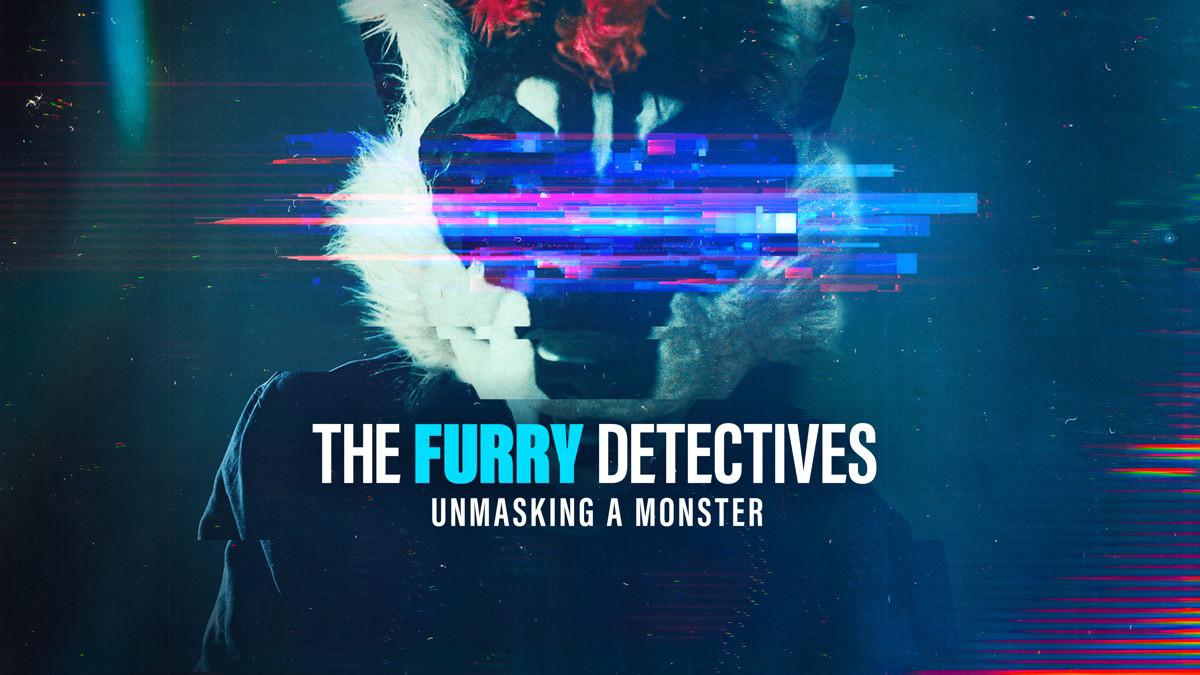
When AMC announced The Furry Detectives: Unmasking a Monster, a docuseries covering the 2018 zoosadist leaks, I approached it expecting disappointment. As someone familiar with the original leaks and the community fallout that followed, I didn’t believe any mainstream production could do justice to the complexity, horror, or nuance behind the case. Surprisingly, the series chose a very different approach. It framed the story as a lighthearted and accessible retelling designed more to uplift than to inform.
In this article I’ll break down how The Furry Detectives handles its subject matter. We will be analyzing everything from the editing to the factual liberties it takes with timeline, representation, and real-life participants. While there is strong storytelling and high production value, the doc is frequently undermined by selective editing and a heavy-handed narrative that distorts more than it clarifies. This isn’t just a review, but a close examination of what the series gets right, what it omits, and what it reshapes to fit a more digestible story arc.
Despite how it’s being marketed The Furry Detectives is not a documentary in the traditional sense. Calling it a “documentary” feels disingenuous. This is a dramatized retelling based loosely on true events. It’s stylized, simplified, and presented in a way that prioritizes narrative satisfaction over factual depth. It most closely fits the criteria of a ‘docu-drama,’ which allows for dramatic liberties and leans on reenactments over strict factual reporting.
Much of the moral ambiguity and dark realities of the case were removed. Instead the series was boiled down to a feel-good underdog story. But in fairness, that seems to have been director Theo Love’s goal. He wanted to tell a story that shows even in the darkest corners of the internet, good people will still stand up and fight.
But that was what ultimately became the heart of my job: How do we shine a light on the darkest areas of society in a way that is productive and gives hope? Because I don’t want to make movies that make people feel bad. There’s enough in real life that makes you feel bad. When you sit down and you watch The Furry Detectives, I want you to end with the knowledge that there are good people out there who are doing good work. And you can participate as well. – Director Theo Love
Strengths and Editing
That said, the production value deserves praise. The editing is sharp. I was impressed by how the original chat logs were interwoven with interviews, allowing important moments to land without feeling forced. A standout example is the now-famous scene of Kero sipping water mid-interview, a simple action edited so effectively that it communicates his guilt without a word needing to be said. This skillful interplay of timing and reveals continues through the very end of Episode 4, when the editors ask Kero if he’s ever spoken to SnakeThing… he says no… only to immediately cut to his earlier response to the drama, where he admits he did speak to SnakeThing but didn’t realize he was “bad.” The contrast lands like a punch showcasing the series’ knack for dramatic timing.

One of the series’ most effective editing techniques is how it builds anticipation before introducing key figures. Several individuals are shown saying a name in rapid succession, each clip layered to create tension, before the camera finally introduces the person in question. This is done both with Akela and SnakeThing, and the effect is immediate, it’s a masterclass in pacing and narrative construction that makes even brief introductions feel dramatic and significant.
That same careful attention follows into the quieter strengths of the series and how it portrays the emotional connections of those affected by the case, particularly through Connor Goodwolf. His interviews give the audience a window into the human side of the investigation. Connor’s personality and his interviews make the narrative feel grounded and heartfelt. These moments of genuine emotion provide balance while reminding viewers of the real people behind the story.

One of The Furry Detectives’ most characteristic features is its use of dramatized recreations. The reenactments of SnakeThing’s arrest and Kero’s search warrant sequence are staged with cinematic flair and suspenseful music that makes the stakes feel immediate. These scenes are VERY engaging, they give me goosebumps every single time, even on repeat viewings. These dramatizations make the dark subject accessible to viewers, providing a visual shorthand for the events and heightening the emotional impact of the story. They seemed silly at first, but after a couple viewings it became clear that this was intended for the uninitiated.


But I don’t think anybody watches documentaries and says, ‘It was good, but I just wish there were more recreations.’ Recreations have come a long way, but I still don’t think people are saying that—except for me. I love recreations. -Director Theo Love
Comedic Touches and Tonal Choices
At times these dramatizations feel slightly misplaced. The Akela flashback, for example, interrupts the tension rather than providing a well-timed break. Still, the artistry in cinematography, pacing, and framing is impressive, and the sequences effectively convey the stakes and emotions of the story. The tonal clash is likely intentional, the director Theo Love has a background in comedy and has spoken proudly about injecting levity into the series. While the effort to make the story more lighthearted is clear, here it lands awkwardly, interrupting the narrative flow rather than enhancing it.
Another hilarious comedic touch comes from how the series portrays the detectives in full furry gear, often leaving their suits on while performing everyday tasks. Whether they’re typing at a computer, driving a tractor-trailer, or just walking through town, the visuals are absurd in a way that only makes sense when you learn about Theo Love’s background in comedy. The effect humanizes the subjects while gently poking fun at the eccentricity of their subculture. These moments provide levity without detracting from the narrative, offering a kind of visual wink to the audience that acknowledges the strangeness of the world being depicted.
Balancing Truth vs Representation
Episode 2, “Predator becomes Prey,” is hands down the most entertaining of the series. It’s fast-paced and masterfully edited. But while it may be the most engaging, it’s also where the show starts seriously detaching from the facts. The research feels thin, and instead of anchoring the episode in the concrete investigative work, it leans hard into the personal narratives of the self-proclaimed “detectives.”
Then there’s the moment where Naia stutters mid-interview and asks for a retake, only for the editors to leave it in. They also leave in a phone call she receives during another take. The editing doesn’t pull punches, it seems like the editors want to undermine their own subjects. No one is spared, not even the “heroes.” It’s brutal and hilarious. What becomes obvious is that a lot of these people who once stood shoulder-to-shoulder with known zoophiles are now trying to retroactively rewrite history. But the show doesn’t let them get away with it. Just like in Episode 1 with Kero, Episode 2 frequently cuts directly from someone trying to save face… to leaked logs that contradict them.


One of the funniest examples comes when R insists on-camera that she could “never” get on board with working with zoophiles, only for the edit to cut straight into her own leaked logs coordinating with them. It’s a perfect setup-punchline moment, even if the snippet they chose is clearly cropped to fit the episode’s arc. The actual logs tell a much messier story than the cherry-picked lines we see here, but in the show’s version, the contradiction solidly lands and shows us that even our detectives cannot be fully trusted.
Throughout the series, the editors face the detectives with their own leaked logs, creating a dynamic where the series simultaneously protects and critiques its subjects. It’s obvious the editors were attempting to humanize the detectives while also holding them accountable, but in doing so the narrative sometimes undermines its own authority. The result is a show that is both highly entertaining and deeply confusing, leaving the audience constantly questioning what is authentic and what is narrative shaping.
It’s hard to say what the editors’ intentions truly are. This episode makes the investigators look messy, petty, and often self-serving, but it is still entertaining.
My job is to share their story in the most palatable package, and in a way that they feel best represents them. And when I talk to people about how they want to be represented, it’s usually not an accurate portrayal of who they are. Just like my image of myself is probably a little bit more grandiose than what’s in the mirror, right? -Director Theo Love
It’s clear that the production team wrestled with the difficult balance between showing events accurately and portraying the detectives in a way that aligned with how they wanted to be seen. The series frequently flips between these two priorities, sometimes exposing contradictions, and other times softening or omitting moments to protect their reputations. This flip-flopping creates a disjointed experience where viewers are left unsure whether they’re seeing the full truth or a curated image of the participants.

Grounded Investigations
While much of the series leans heavily on dramatization and comedic flourishes, the first half of Episode 4 is where the show truly excels. This segment steps back from the personal drama of the “furry detectives” and instead shows viewers the real investigative work, giving the series a moment of grounding. Interviews with law enforcement, prosecutors, and investigators from across the globe provide context and authority that the earlier episodes often lack. The series covers the prosecution of Adam Britton and Lucas “Graves” VanWoert in detail, walking the audience through how the arrests were made, the evidence gathered, and the legal process that followed.
What sets this section apart is how it combines professional insight with bodycam recordings, real court proceedings, and direct commentary from the officers involved. This gives viewers a front-row seat to the operations behind these investigations. Unlike other parts of the series, there is no need to soften or dramatize the narrative, the facts themselves carry tension, drama, and emotional weight. The editors allow these sequences to breathe, letting the evidence and testimony speak for themselves, which makes the story feel authentic.
This portion of the series demonstrates what the show could achieve when it trusts the real events to be compelling on their own. It’s intense and informative, offering a rare glimpse into the global effort to investigate and prosecute zoosadists. At the same time, it shows that dramatic recreations can still thrive within this grounded style. The re-enactment of Adam Britton’s arrest in particular fits perfectly and heightens tension while not feeling out of place. For anyone seeking the most grounded and factual part of the series, the first half of Episode 4 is it.
Editorial and Narrative Liberties
One of the most striking editorial liberties in The Furry Detectives is how it handles the leaked chat logs and public statements from key figures. Rather than presenting these materials in their original context, the show frequently re-stages them with heavy edits, rearranged chronology, and outright platform changes. Messages are sometimes shortened to a few punchy lines, stripped of the surrounding discussion that might complicate or even contradict the point the show is trying to make.
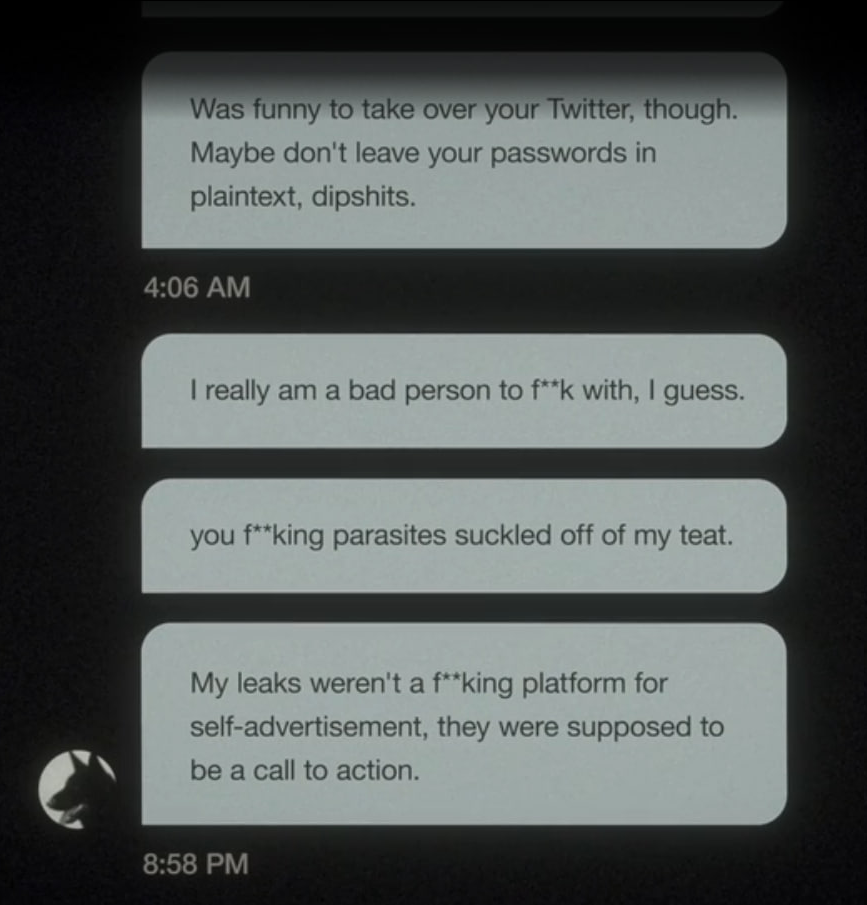
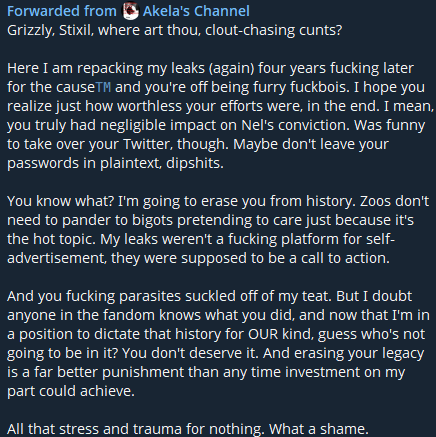
A glaring example is the segment on Akela’s criticism of the Furvengers where he accused them of being clout chasers. In reality, this was posted as a long-form announcement in a Telegram channel, with multiple paragraphs explaining his reasoning. The documentary doesn’t show that. Instead, the editors lift select sentences, shuffle them into a different order, and present them as if they were Twitter direct messages. The rearranged version removes most of the nuance, cutting context, and reframes it as a private feud rather than a public, transparent post. It’s an intentional splice to serve R’s current narrative of being “harassed” by Akela, rewriting the situation to fit the narrative.
One of the series’ most obvious narrative liberties is how it flattens the timeline and merges two entirely separate investigative teams, the ZSIS and the Furvengers, into one amorphous “good guy” collective. In reality, these groups had different origins, leadership, and priorities, with the Furvengers forming later as a spinoff rather than a founding partner.

This confusion is most obvious in Episode 2, where the creation of the Furvengers is shown taking place directly inside the ZSIS: Operations chat. During this scene, we’re shown a graphic of ZSIS members superimposed as the Avengers. From that point on, the series uses “the Furvengers” and “ZSIS” interchangeably, and attributes accomplishments from both teams to the same handful of people.

It’s clear why they did this. Keeping the story streamlined and character-driven makes for easier television. Introducing multiple investigative teams, each with their own inner conflicts and shifting memberships, would have required more exposition and a more sophisticated narrative structure. Instead, the show prioritizes digestibility at the expense of historical accuracy.
you know because there’s always, like, these multiple sides to the story, and like, one group, you know, says, “Oh, they’re heroes,” and the other group is saying, “Oh no, like they’re bad” and it’s just tiresome to be honest, like, I just want to know that there’s good out there, and sometimes you’re not able to find the good unless you’re willing to look at the bad, right? -Director Theo Love
But this isn’t just a nitpick. The distinction between ZSIS and the Furvengers is important because Episodes 2 and 3 briefly allude to political divides and infighting that eventually tore these efforts apart. Without understanding that these were two different groups with different internal cultures and priorities, those references come off as vague and confusing. The audience is told there was tension, but not given the context to understand what the tension was about or why it mattered.

It’s understandable why the showmakers made this decision. Introducing multiple factions would have required more narrative work and potentially complicated the storyline. But that complexity was the story. By flattening the teams into one feel-good collective, the documentary sacrifices accuracy for cohesion, leaving viewers with a version of events that feels cleaner, but ultimately says less.
How do the people featured feel?
While The Furry Detectives’ marketing emphasized its dedication to truth and transparency, some of those who participated in it walked away with a different impression. Several interviewees noted that their words were not presented exactly as spoken, with edits creating implications that were not factually accurate.
One such example comes from Naia, an activist featured in the series. She told me directly:
They distorted my interviews a bit… I was talking about another zoosadism group, not the one Snake Thing was in. Then they cut it as if I was talking about the Snake Thing group. -Naia Okami
Naia also expressed frustration with what she saw as favoritism in how different figures were portrayed. Certain participants were shown in a more favorable light, while others were credited with achievements they did not claim.
I was not a fan of the favoritism either… Overall I like my portrayal other than giving me credit by implication for cases I wasn’t involved in and never claimed to be involved in. – Naia Okami
Zoodonym stated that this article “is a pretty good summation of many of my thoughts on the documentary.”
Kero the Wolf himself has publicly said in a YouTube video that he was tricked into appearing in The Furry Detectives under false pretenses, believing he would be given a fair chance to speak. In his account, not only was he misled about the nature of the interview, but his words were cut and re-sequenced to fit the production’s pre-chosen narrative. According to him, whole portions of his interview that provided context or nuance were simply omitted.

To be clear, I believe Kero is guilty of exactly what the leaks exposed him for, and I think his inclusion in the series is warranted. But if what he says about being clipped out of context is true, it adds weight to the idea that the AMC team was willing to sacrifice truth for impact. When you’re telling a story as serious as this, any willingness to distort a participant’s account, even one from a guilty party, chips away at credibility. If the goal is exposing reality, truth should never be bent to fit a narrative.
I reached out to Patch O’Furr for comment, Patch did not respond.
